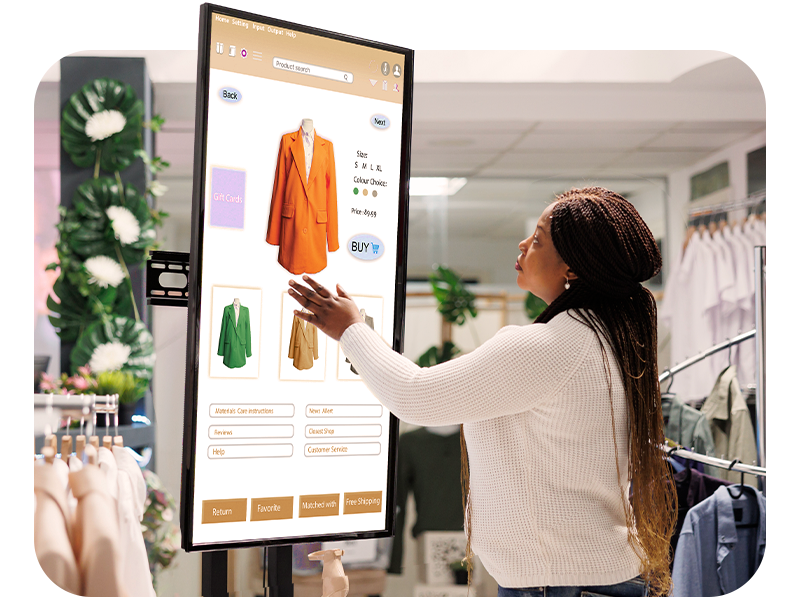
Delivering experience-led omnichannel retail & eCommerce solutions
Retail and eCommerce business models we serve
Business to Business (B2B)
Business to Consumer (B2C)
Business to Business to Consumer (B2B2C)
Digital Marketplaces
Our Custom eCommerce Development Services
Retail & eCommerce Consulting
Omnichannel Commerce
Experience Design
eCommerce Integration
eCommerce Migration
Managed Services
eCommerce development services success stories
Explore how 400+ brands achieved cost-effective, high-performing eCommerce solutions with Ranosys as their trusted global partner.


Ranosys has assisted Skechers in enhancing customer experience by integrating online fulfillment of shoes and apparel for men, women and kids.


Panasonic collaborates with Ranosys to enhance the performance of their multi-country eCommerce stores.


Nespresso reaches out customers on the go for their regular caffeine needs with Ranosys mobility and commerce experts.
View Case Study

Ranosys is supporting Rutland in its digital transformation journey of omnichannel experience for its customers with Salesforce ecosystem.
View Case Study

Ranosys assists Berkshire Hathaway in revamping their online store to boost user engagement and drive higher traffic.


Ranosys partners with Under Armour to enhance the performance of its SFCC eCommerce platform through technical support and optimization.


Ranosys helped Steve Madden launch a faster online store that improves shopping experiences across all customer touchpoints.
View Case Study

Mothercare helps mummies and babies to start their eternal bond by delivering their needs at doorsteps with Ranosys commerce experts.
View Case StudyPlatform-driven eCommerce development solutions


We are an 3X award-winning Adobe Gold Partner, specialized in Adobe Commerce well-versed with all platform capabilities, PWA, and modern features.


Leveraging the powerful solutions of Salesforce Commerce Cloud and our strategic implementation across multiple clouds, we build eCommerce platforms designed to win.


Go live to the market in a lightning-fast manner, activate eCommerce strategy and design personalized digital solutions with our trusted Shopify development services.
Leveraging the MACH (microservices, API, cloud and headless commerce) principles, we accelerate the digital capabilities of ambitious brands with commercetools.
Seamless Retail & eCommerce integrations


Launch your retail & commerce business faster with our accelerator solutions
Accelerators for B2C and B2B – quick launches, cost effective, powerful scaling.


Falcon - Adobe Commerce B2C Accelerator
Start Selling Online B2C in 4 Weeks with Adobe Commerce Accelerator.


Phoenix - Salesforce Commerce B2C Accelerator
Launch your online B2C business in 6 weeks with Salesforce eCommerce Accelerator.


Falcon PWA - Adobe Commerce Headless Accelerator
Deliver mobile-first headless storefronts in 4–6 weeks with Magento PWA Studio.


Plover - Shopify Plus Commerce Accelerator
Embrace the power of enterprise eCommerce with our Shopify Plus Accelerator Plan.
Trusted by leading brands including Fortune 500
We are proud to work with some of the most renowned brands in the world.


Frequently Asked Questions
How does unified commerce improve inventory visibility across channels?
Unified commerce connects stock across stores, warehouses, and digital channels into a single real-time view. This reduces overselling, avoids dead stock, and lets customers see accurate availability wherever they shop. It also supports scenarios like ship-from-store and click-and-collect by using inventory more intelligently across the network.
How can retailers deliver a consistent customer experience across online and offline channels?
Consistency comes from a shared view of the customer and synchronized pricing, promotions, and product information. When your systems talk to each other, customers see the same offers everywhere and don’t have to repeat themselves. Store teams can access the same profiles and history as digital channels, creating a continuous experience.
How does AI-driven personalization improve conversion and retention?
AI analyzes browsing, purchase, and engagement patterns to tailor product recommendations and content. When customers see items, sizes, and offers that feel relevant, they are more likely to buy and return. Over time, AI can learn seasonality, preferences, and price sensitivity, lifting conversion and average order value without feeling intrusive.
How do retailers start their digital transformation journey?
Start by defining clear goals such as improving margin, reducing returns, or growing specific channels then map the customer journeys that matter most. From there, assess where data is fragmented and which processes cause friction. A phased roadmap, beginning with a few high-impact initiatives, makes change manageable for teams and budgets.
What should retailers consider when choosing a digital transformation partner?
Look for experience in your segment, understanding of omnichannel challenges, and the ability to work across strategy, design, and implementation. A good partner helps you prioritize initiatives, align stakeholders, and choose the right tools, not just deploy technology. Long-term support and a collaborative working style matter as much as technical skills.
How can we use AI to manage supply chain operations and optimize pricing?
AI can forecast demand by product, location, and channel, helping you position stock before you need it. It can also simulate pricing scenarios and recommend adjustments based on elasticity and competitor moves. When connected to your planning and merchandising processes, this reduces stockouts, markdowns, and missed margin opportunities.
Why are data and insights critical for retail decision-making?
Retail is too fast-moving for decisions based solely on intuition. Combining transaction, traffic, and engagement data shows what’s working and what isn’t by product, store, campaign, and customer segment. Real-time insights allow you to tweak assortments, campaigns, and experiences quickly, instead of waiting for end-of-season results.
How can consumer goods companies manage loyalty and repeat purchases?
Loyalty is driven by recognition, relevance, and ease. Programs that reward both purchases and engagement, combined with tailored offers and convenient reordering, keep brands top of mind. Using first-party data responsibly, you can design journeys that feel helpful rather than pushy, encouraging customers to buy again and explore your wider portfolio.