Talk to our experts
Summary
Dreamforce 2026 underscored Salesforce's "refounding" for the AI era, introducing the "Agentic Enterprise" vision where AI agents, data, applications, and people converge to deliver measurable business value. Innovations like AIforce and Agentforce Coworker elevate AI beyond content generation to multi-step business process automation across diverse interfaces. For retailers, this translates to deeper AI integration into product discovery, personalization, service, and commerce, leveraging connected customer data for more seamless and efficient customer journeys.
Key announcements included Koa, a CRM-specific reasoning model, and Headless 360 with AgentExchange, facilitating robust, externalized Salesforce capabilities and broader AI integration. Expanded partnerships with major AI providers reinforce Salesforce's platform approach, allowing businesses greater choice and flexibility. Critically, "agentic commerce" extends AI into direct shopping experiences via external platforms, necessitating precise product information and unified customer context. This highlights the foundational need for well-structured data and comprehensive governance.
These developments offer a practical path for enterprises, starting with rule-based, high-volume processes to build essential data foundations and governance. The core takeaway emphasizes the necessity of connected customer profiles, product data, and commerce workflows for successful AI implementation, particularly in retail. As a trusted Salesforce Summit Partner, Ranosys helps organizations assess AI use cases, prepare Data 360, implement Agentforce, and optimize retail commerce processes for AI-powered customer experiences, ensuring scalable and secure digital transformation.
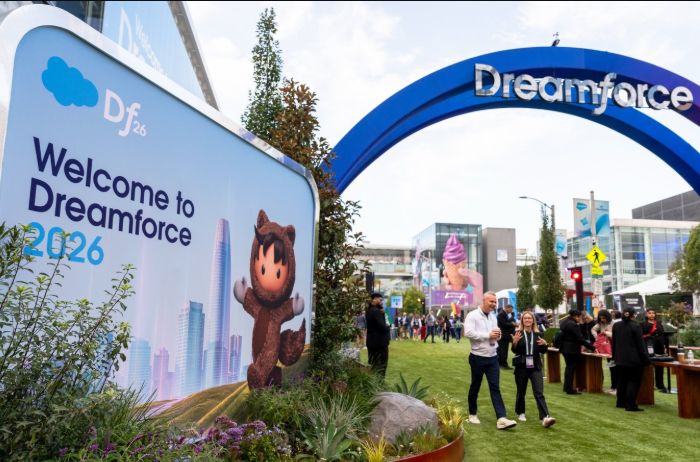
Most enterprise teams using Salesforce have spent the past year testing Agentforce through service, sales, or customer experience pilots. The bigger question now is how these pilots move into everyday business processes and where AI can create measurable value. Dreamforce 2026 ran from September 15 to 17 in San Francisco, where Marc Benioff described the event as a “refounding” for the AI era and introduced Salesforce’s vision of the Agentic Enterprise, where people, data, applications, and AI agents work together.
For retailers, the announcements are particularly relevant because Salesforce is taking AI deeper into product discovery, personalization, service, and commerce. The event introduced several major changes to Salesforce AI, Agentforce, data, and commerce capabilities, while also expanding integrations with companies such as Anthropic, Google Cloud, AWS, NVIDIA, and OpenAI. This article covers the major Dreamforce 2026 highlights, with a closer look at the announcements shaping retail and agentic commerce.
Dreamforce 2026 at a Glance
The Dreamforce 2026 announcements covered AI agents, CRM reasoning, customer data, commerce, integrations, and enterprise governance. Salesforce reported roughly 53,000 people attending on-site, with millions more watching through Salesforce+. Across the keynotes, the message was consistent: Salesforce wants its data, workflows, business rules, and actions to be available across the systems and interfaces where employees and customers already work.
The major Dreamforce 2026 key announcements included AIforce, Agentforce Coworker, Koa, Headless 360, AgentExchange, Claudeforce, Slackforce, expanded Google Cloud and AWS partnerships, and new developments in agentic commerce. Together, these announcements point toward a Salesforce platform where customer data, AI models, business processes, and actions can work across different applications and customer experiences.
Salesforce Refounds Itself for the Agentic Enterprise
The Salesforce Agentic Enterprise vision sits behind many of the announcements. Salesforce is positioning AI agents as systems that can understand business context, follow defined rules, make decisions, and take actions within boundaries set by an organization. This expands the role of Salesforce AI, which has previously focused heavily on activities such as generated content, summaries, recommendations, and suggested next steps.
For retailers, this direction has direct implications for the customer journey. A shopper may discover a product, compare options, add an item to a wishlist, place an order, request an exchange, contact customer service, and later receive a loyalty offer. Connecting customer data, product information, commerce workflows, and AI agents can allow these activities to work as part of a connected journey instead of separate interactions across different systems.
AIforce Brings Salesforce Into Any AI Interface
Salesforce AIforce was one of the biggest Dreamforce 2026 AI announcements. Salesforce describes it as a live interface layer that brings enterprise knowledge from Salesforce, including data, workflows, business logic, permissions, security, and governance, into agentic platforms. Employees can access Salesforce information and actions from Claude, Slack, Lightning, or other interfaces while keeping the controls defined within Salesforce.
For retailers, this approach can also affect customer-facing experiences. Product, customer, order, inventory, and service information can become available to AI-powered experiences when the underlying data and permissions are properly structured. As customers increasingly use search engines, AI assistants, websites, and commerce platforms to research products, AIforce gives Salesforce customers another way to connect their business information to those experiences.
Agentforce Coworker Takes On Multi-Step Work
Agentforce Coworker takes Salesforce Agentforce further by allowing agents to complete multi-step business tasks alongside employees. An agent can gather information, apply business rules, work across connected systems, complete an action, and involve a person when human judgment is required. Salesforce also introduced a long-horizon runtime that allows agents to pursue objectives that can span weeks rather than handling only individual tasks.
Salesforce shared several customer examples at Dreamforce 2026. Fulton Bank moved from zero to more than 20 Agentforce Coworker use cases and around 3,000 users within weeks, while Adecco is rolling Coworker out to 27,000 employees across more than 40 countries. For retailers, similar capabilities can apply to order questions, returns, exchanges, service requests, and customer support where processes and business rules are clearly defined.
Koa: A Reasoning Model Built for CRM
Koa is Salesforce’s first CRM reasoning model, created by post-training NVIDIA’s Nemotron 3 Super on simulated enterprise scenarios rather than general internet data. Salesforce executives have explained that CRM work benefits from models trained around the specific rules and processes they need to handle. Koa is already used for internal Salesforce workflows and is being tested by customers for service, sales, and commerce agents.
This matters when AI needs to work with detailed business processes rather than simply generate information. For retailers, CRM-specific reasoning can be relevant when agents work with customer records, orders, service rules, product information, and commerce processes. Koa also gives Salesforce customers another reasoning option alongside models such as Claude and other AI systems connected to the platform.
Headless 360 and AgentExchange Open Salesforce to More Agents and Apps
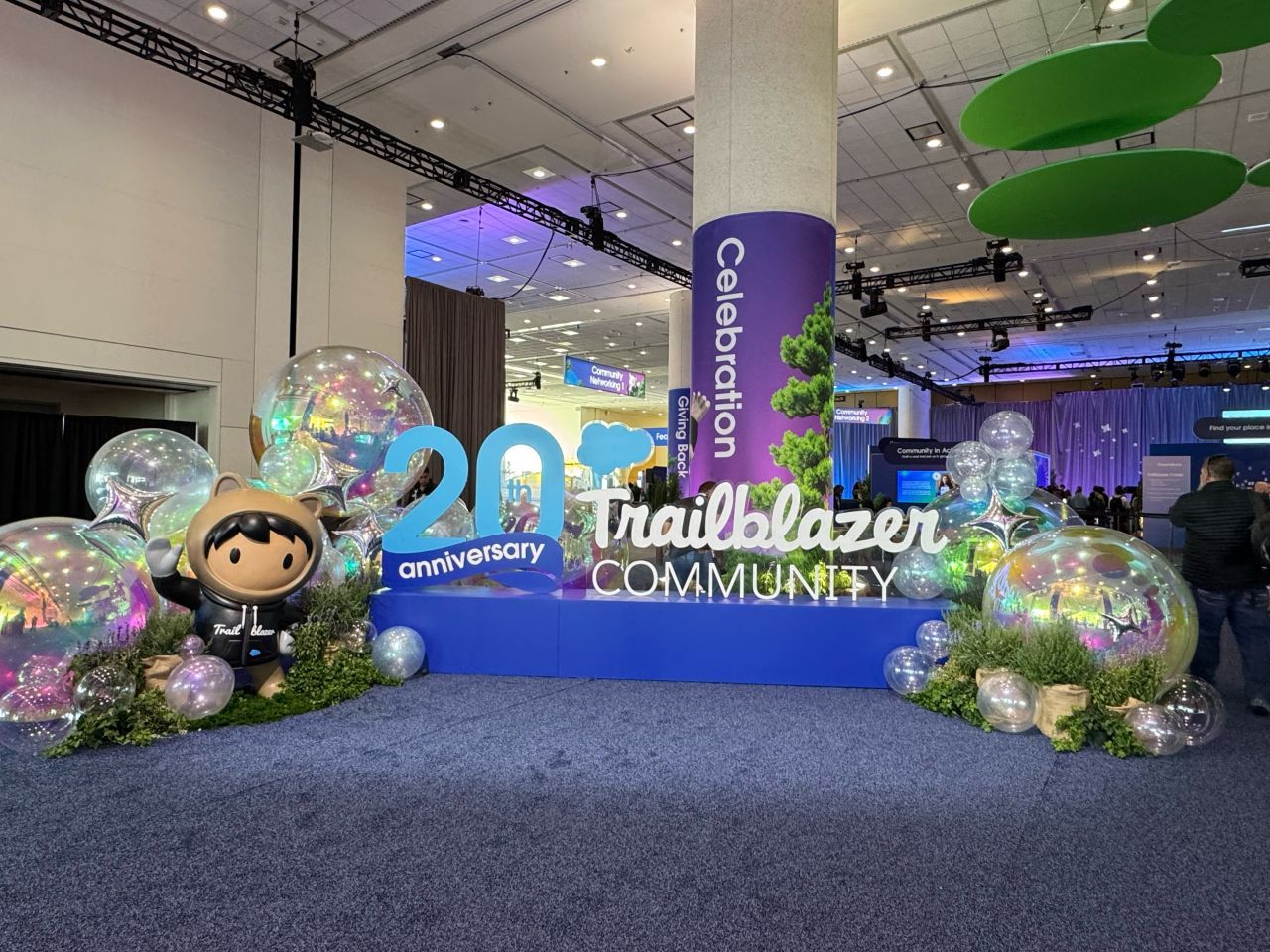
Salesforce Headless 360 makes Salesforce functions available outside the standard application interface through MCP servers, reusable skills, developer tools, Data 360 access, and headless experiences. AgentExchange adds a marketplace for agents, skills, and add-ons that businesses can use as they develop their AI plans. Salesforce also connected these developments with the 20th anniversary of its Trailblazer community.
For retailers, these capabilities can connect Salesforce CRM and commerce functions with websites, mobile applications, service channels, and AI interfaces. This becomes important as shoppers move between traditional digital channels and AI assistants during product discovery, comparison, purchasing, and service. Retailers need these experiences to work from consistent customer and product information rather than separate data sources.
Salesforce Expands Its AI Partnerships
The partnership announcements showed Salesforce building for a world where companies use more Salesforce also announced deeper relationships with major AI and cloud providers. Claudeforce, introduced alongside Anthropic CEO Dario Amodei, brings Salesforce data, workflows, actions, and governance into Claude, while Slackforce brings CRM intelligence and actions into Slack. Salesforce also highlighted expanded partnerships with Google Cloud and AWS, giving businesses more options for AI models, infrastructure, and connected workflows.
For retailers, model choice matters because customer journeys already involve multiple platforms. The challenge is keeping customer records, product information, permissions, inventory, and business rules connected as more AI experiences become part of the shopping journey. This makes data architecture and governance important considerations alongside the choice of AI model.
Agentic Commerce Brings AI Agents Into the Buying Journey
One of the most important Dreamforce 2026 retail highlights was the focus on agentic commerce. Salesforce is extending AI agents into product discovery and shopping through platforms such as ChatGPT, Google Search, and Gemini. A customer could ask an AI assistant to compare products, answer questions, identify suitable options, and potentially support a purchase without beginning the journey on the retailer’s website.
For retailers, this changes the importance of product data and customer context. AI shopping experiences depend on accurate product information, availability, pricing, delivery details, customer preferences, and other commerce data. Salesforce Data 360 can provide a connected customer foundation for experiences across marketing, sales, commerce, and service, while accurate product and inventory data gives AI systems the information they need to answer customer questions correctly.
The opportunity extends beyond product discovery. An AI agent could help a customer select a product, answer questions about delivery, support the purchase, provide order information, and later assist with a return or service request. This connects Salesforce Agentforce, Data 360, commerce capabilities, and external AI interfaces across different stages of the customer journey.
Agentforce Results From Real Deployments
Salesforce also shared examples of Agentforce being used for specific business processes. Air India reported reducing internal refund processing from roughly 14 days to about four hours, while its name-change process moved from around three days to 30 minutes. Siemens uses Agentforce to qualify inbound leads for its 18,000 sellers, and Live Nation uses it to support fans across venue experiences.
These examples point to a practical starting point for enterprise AI: specific processes with clear rules, data, and expected outcomes. Retailers can apply the same approach to order status requests, returns and exchanges, product questions, customer service triage, and other high-volume workflows before expanding AI into more complex customer journeys.
Trust and Governance Come First
As AI agents receive more responsibility, businesses need clear controls over what those agents can access and which actions they can perform. Salesforce’s Trusted Enterprise AI approach focuses on business context, permissions, security, governance, and human oversight. AIforce was also designed with zero data retention so that business data used to answer a question is not retained by the model provider.
This matters for retailers because AI may work with customer information, orders, loyalty data, product records, inventory, and service processes. Before deploying AI agents for business, organizations need to define data access, approval points, permitted actions, monitoring, and situations where an employee should take over. These controls become part of the implementation rather than something added after deployment.
What Dreamforce 2026 Means for Enterprise Teams
The major Dreamforce 2026 key takeaways extend beyond individual product announcements. Salesforce’s Agentic Enterprise Index, based on production activity across 400 companies and a survey of nearly 5,000 professionals across nine markets, reported that the average number of active agents per organization increased from five in February 2025 to 13 in April 2026. The same research reported that the average time to put an agent into production fell from four days to under two.
For retailers, the foundation matters as much as the AI. Customer profiles, product information, inventory, commerce workflows, permissions, and service data need to be connected before AI can reliably support customer journeys. Starting with one high-volume, rule-based process gives teams a practical way to test the technology while building the data and governance needed for broader adoption.
Conclusion
The Dreamforce 2026 announcements show Salesforce moving AI closer to everyday business operations and customer interactions. AIforce, Agentforce Coworker, Koa, Headless 360, AgentExchange, and the expanded AI partnerships all contribute to this direction, while agentic commerce brings the discussion directly into retail product discovery and shopping.
For retail businesses, the focus now is on where connected customer data, commerce workflows, and AI agents can work together. As a Salesforce Summit Partner, Ranosys helps enterprises assess AI use cases, prepare Data 360, implement Agentforce, connect Salesforce with other AI platforms, and prepare retail commerce processes for AI-powered customer experiences.