
Talk to our experts
The enterprise technology landscape is fundamentally shifting. According to Gartner research, 40% of enterprise applications will feature task-specific AI agents by 2026, marking one of the fastest transformations in enterprise technology since cloud adoption. By 2027, Gartner forecasts that AI agents will augment or automate 50% of business decisions, reshaping how organizations operate across finance, insurance, pharmaceuticals, and beyond.
But what separates winning organizations from the struggling ones is understanding that they deploy AI agents strategically with governance, security, and measurable ROI at the center.
Enterprises like Axos Bank, Thermo Fisher Scientific, MAGnet Auctions, and Ascot Insurance have moved beyond experimental pilots into production systems delivering tangible business value. They’ve discovered that the convergence of two critical technologies, OutSystems low-code platforms and agentic AI, creates an unprecedented opportunity for competitive advantage in 2026 and beyond.
This guide explores how these technologies work together, what real organizations are achieving, and why enterprise agentic AI platforms like OutSystems matter for your organization’s future.
How agentic AI transforms enterprise workflows
To understand where we are today, it’s important to understand the evolution of automation technology. The limitations of traditional approaches have created the perfect conditions for agentic AI in enterprise workflows to thrive.
Traditional automation (like Robotic Process Automation or RPA) follows rigid rules. Press button A, and you always get result A. This works perfectly for predictable, repetitive work. But the moment reality doesn’t fit the predefined rules, the system breaks down. It cannot think, adapt, or handle exceptions.
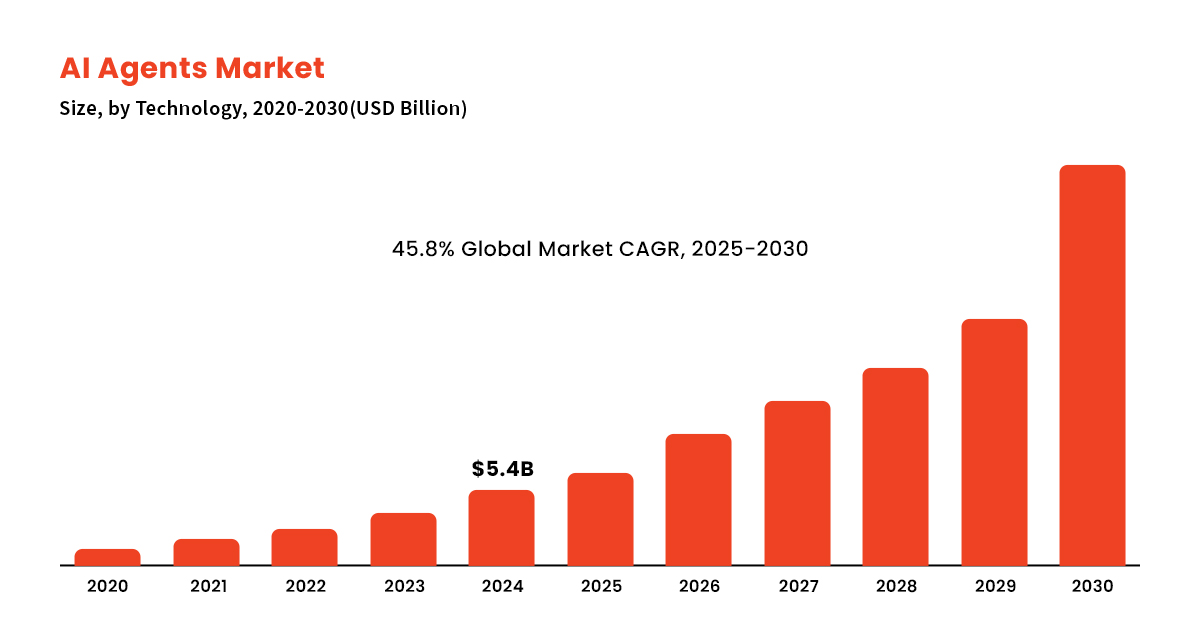
Agentic AI is fundamentally different. These autonomous agents:
- Make decisions independently based on context and business rules
- Learn from experience and continuously improve their performance
- Handle exceptions without human intervention
- Collaborate seamlessly with both people and other systems
- Reason about situations before taking action
The challenges with traditional automation
Organizations trying to scale automation using legacy approaches face significant obstacles:
Limited scope and flexibility: Traditional automation tools only work for highly structured, repetitive tasks. They cannot handle the unpredictable variations that occur in real-world business processes.
High implementation costs and time: Building custom automation solutions requires extensive coding, specialized skills, and months of development. This makes it expensive and slow to scale across the organization.
Governance and control concerns: Without proper oversight mechanisms, automated systems can create compliance risks, data security issues, and business process failures.
Skill bottleneck: Most organizations lack the AI and automation expertise to build intelligent systems at scale, limiting their ability to innovate.
Ready to build autonomous agents that think, adapt, and deliver results?
Building trusted systems with OutSystems AI agents
OutSystems uniquely combines three critical capabilities:
- Low-code accessibility – Democratizing AI agent development so teams without AI expertise can build enterprise-grade systems
- Enterprise governance – Integrated controls that ensure OutSystems agentic AI is compliant, secure, and auditable. This includes data access controls, policy compliance maintenance, full auditability, human-in-the-loop orchestration, and built-in security.
- Production-ready orchestration – OutSystems workflow automation connects multiple agents into coordinated workflows that solve complex business problems end-to-end.
This combination transforms AI from experimental pilots into strategic business assets. More than 5,500 AI agents are in development on OutSystems, with enterprises achieving 171% average ROI from agentic AI deployments.
OutSystems Agent Workbench
In September 2025, OutSystems Agent Workbench was launched to general availability, a comprehensive platform specifically designed for building and orchestrating intelligent AI agents across enterprise data, workflows, and systems.
The momentum has been remarkable:
- 5,500+ AI agents are currently in development across the platform
- 1,500+ certified developers actively building enterprise-grade AI applications
- 25% launching pilots in 2025, expected to reach 50% by 2027
Key Capabilities of OutSystems Agent Workbench
- Model flexibility and intelligent routing: Integrate with leading large language models (Bedrock, Azure OpenAI, Anthropic, Gemini, Cohere, and others). Connect a single model and reuse it across multiple agents, or route requests based on accuracy, cost, and latency requirements for different use cases.
- Ready-to-use agent integrations: Connect directly to productivity platforms (Google Calendar, Confluence, Notion, Trello, Asana, Jira, Monday.com) without building custom connectors.
- Model Context Protocol (MCP) support: Give agents direct access to enterprise systems, external tools, and services, accelerating automation by connecting to what’s already in your environment.
- Agent marketplace: Discover, deploy, and customize pre-built agents for common enterprise use cases, reducing development time and leveraging community expertise.
How leading enterprises use OutSystems AI Agents for automation
Organizations are moving from experimentation to production deployments with measurable business results.
- Agentic AI in banking: Axos Bank developed intelligent log analysis agents with OutSystems AI agents that interpret error logs in real-time, eliminating hours of manual analysis. They also built automated document mapping agents, removing repetitive data entry.
- Enterprise AI in financial services: Thermo Fisher Scientific uses OutSystems Agent Workbench for customer escalation operations. The agent processes unstructured customer data to categorize and resolve issues quickly, reducing manual intervention and improving resolution times by significant margins.
- AI Agents for Enterprise Automation: MAGnet Auctions deployed an OutSystems AI agent for vehicle quality assurance. The agent automatically reads odometer photos and flags discrepancies by comparing values against database records. Manual photo review volume dropped by 90%, delivering substantial cost savings and freeing staff for high-value work.
Key benefits of OutSystems AI agents for enterprises
Dramatic time and cost savings
According to Gartner research, organizations using AI agents can achieve measurable improvements in operational efficiency:
- 70% reduction in order processing times through autonomous workflow management
- 45% reduction in compliance costs through automated workflow management
- 30-50% cost savings in the first year from AI-driven workflow automation
These improvements come from eliminating manual handoffs, reducing errors, and enabling processes to run continuously without human intervention.
Customer service transformation at scale
Gartner projects that 68% of customer service interactions will be handled by agentic AI by 2028. This represents a fundamental shift in how enterprises deliver support. Rather than replacement, this is transformation: AI agents handle routine inquiries instantly answering FAQs, checking order status, resolving common issues while freeing human agents for complex, high-value interactions that require judgment, empathy, and nuanced problem-solving.
This dual approach delivers better customer satisfaction while improving agent job quality and reducing operational costs.
Accelerated development and deployment
Organizations using low-code agentic AI platforms report up to 90% reduction in application development time compared to traditional coding approaches. This acceleration compounds when applied to AI agent development. Instead of spending months building custom AI solutions, teams can develop agents in weeks, test them, and deploy them to production quickly.
This speed advantage becomes critical in competitive markets where the ability to innovate and respond to business changes faster than competitors matters significantly.
How to implement OutSystems AI agents strategically
Successful OutSystems deployments share common patterns:
Start with high-friction workflows
Target processes that consume significant time, span multiple systems, and have clear business impact. Don’t try to automate everything at once. Focus on specific problems where AI agents deliver immediate, measurable value.
These initial successes build internal confidence and provide proof points for scaling. When your first agent delivers a 70% reduction in processing time for a critical workflow, stakeholders become believers. That credibility makes scaling much easier.
Establish governance from day one
With OutSystems, governance is built into the platform, not added afterward as an afterthought. Agents operate within defined boundaries, access appropriate data, respect company policies, and maintain full auditability.
This built-in approach addresses enterprise concerns about AI safety and compliance without slowing deployment. You’re not choosing between speed and safety you’re getting both.
Key governance elements:
- Define data access permissions before deploying agents
- Set up policy compliance monitoring for your specific requirements
- Enable audit logging for all agent decisions
- Design human-in-the-loop orchestration for high-risk decisions
Measure results carefully
OutSystems provides built-in visibility into agent performance and business outcomes. Establish clear metrics before deployment, don’t wait until after go-live to figure out what success looks like.
Metrics to track:
- Task completion rates (is the agent actually completing work?)
- Time savings (compared to manual process)
- Error reduction (is automation more accurate?)
- User satisfaction (do stakeholders trust the results?)
- Cost savings (what’s the financial impact?)
Track these metrics rigorously and use results to guide expansion decisions. Data beats intuition every time
Expand methodically
Once you’ve proven ROI with initial agents, use those learnings to expand across departments and workflows. OutSystems’ orchestration capabilities make connecting new agents to existing systems straightforward.
This methodical approach builds organizational capability while managing risk where you’re building confidence and expertise incrementally.
Invest in enablement
OutSystems has certified 1,500 developers to build enterprise-grade agentic applications. This growing community proves that agentic AI development is becoming accessible not just for AI specialists but for your existing development team.
Invest in training your people, and they’ll become your competitive advantage. An organization that can internally build agents has far more flexibility and speed than one dependent on external consultants.
How Ranosys can help you implement agentic AI for enterprise workflows with OutSystems
Transforming your enterprise workflows with agentic AI requires more than just technology it requires the right partner who understands both the technical complexity and your business context.
With over a decade of experience in helping enterprises transform their operations through OutSystems, Ranosys brings deep expertise in low-code AI implementation combined with proven methodologies for agentic AI consulting services.
We provide end-to-end support across your AI agent journey:
- Strategic consulting to identify high-impact workflows and build your agentic AI roadmap
- Custom development and configuration of OutSystems Agent Workbench tailored to your specific business processes
- Governance and security implementation, ensuring your agents operate within enterprise policies and compliance requirements
- Team enablement and training, equipping your developers and business users to build and manage agents confidently
- Post-deployment optimization and support to maximize ROI and continuously improve agent performance
Ready to transform your enterprise workflows? Let’s discuss how agentic AI can drive competitive advantage for your organization.

Vikas Sharma
Senior System Analyst
OutSystems Champion and Solution Architect with 14 years of IT experience and 8 years of deep expertise in OutSystems. Certified across multiple OutSystems technologies, specializing in enterprise architecture, integrations, and scalable low-code solutions. Connect with him on Linkedin.


