Talk to our experts
Summary
The accelerating trend of online holiday sales and generative AI traffic underscores a shifting retail landscape, necessitating innovative growth strategies for enterprises. An eCommerce marketplace offers a compelling path to scale assortment and GMV without inventory burden. For retailers on platforms like Adobe Commerce, an "extend-first" architectural model, integrating dedicated marketplace solutions such as Mirakl, allows for the strategic addition of multi-seller capabilities while preserving existing customer-facing commerce foundations. This approach minimizes disruption, focusing on adding marketplace-specific services where truly needed.
This extend-first strategy separates core commerce responsibilities (storefront, checkout) from marketplace layers (seller onboarding, offers, operations). Key architectural decisions involve data ownership, order orchestration, and robust payment and fulfillment integration. The rise of AI-powered product discovery further emphasizes the need for pristine catalog management. Mirakl’s AI-driven tools, like Catalog Transformer and Agentic Product Enrichment, are critical for automating data quality and ensuring products are discoverable by advanced AI systems.
Implementing an enterprise marketplace strategy demands deep expertise in Digital Commerce and Digital Transformation. Ranosys, a trusted Adobe Solution Partner, specializes in guiding organizations through architecture assessment and seamless Mirakl integration, particularly with Adobe Commerce. Leveraging our expertise in AI & Analytics and scalable commerce solutions, Ranosys optimizes payment and seller onboarding workflows, ensuring robust, performant marketplaces. We offer comprehensive managed services and roadmap advisory for sustained growth and competitive advantage in the retail sector.
US online holiday sales reached $257.8 billion in November and December 2025, up 6.8% year over year. During the same period, traffic from generative AI sources to retail sites increased 693.4%. For enterprise commerce teams, these figures signal a changing discovery and growth environment. Adobe reports both trends.
For a retailer already running Adobe Commerce, the marketplace question can be difficult. The platform may already manage customer accounts, catalog, pricing, checkout, search, content and enterprise integrations. Introducing third-party sellers can turn a focused marketplace initiative into a broader transformation if the foundation is replaced unnecessarily. That creates a practical architecture question: which existing responsibilities should remain, and which need new marketplace services?
The practical question is which capabilities actually need to change. An extend-first model provides one possible answer: retain suitable commerce capabilities and add marketplace services where required.
What is an ecommerce marketplace strategy?
An ecommerce marketplace strategy defines how a business expands its assortment by enabling multiple sellers to offer products through a shared customer experience. It covers the commercial model, seller onboarding, catalog and offer management, inventory, orders, payments, fulfilment and the systems responsible for each part of the journey.
For an enterprise, it also defines how a third-party marketplace fits with the existing commerce foundation. A B2B marketplace platform may add requirements around account structures, pricing and fulfilment, while a marketplace growth strategy may prioritize assortment expansion or seller acquisition.
Why marketplace strategy starts with the existing foundation
Enterprise retailers are adopting marketplace models for three reasons that first-party expansion cannot replicate. A marketplace adds assortment without the inventory ownership and working capital that stocking products requires. It generates commission-based GMV that scales with seller count rather than with warehouse capacity. And it addresses competitive pressure from aggregator platforms that have already trained customers to expect breadth of assortment as a baseline, not an advantage to be won.
A third-party marketplace introduces a different operating model. Multiple sellers can contribute products, offers, inventory, fulfilment and commercial terms while customers still see one storefront. The systems behind that experience must coordinate many parties.
If the existing commerce platform already meets its core requirements, the architecture decision should consider whether marketplace capabilities can be added without disrupting the customer-facing foundation. The decision is about where each responsibility should live.
- Commerce foundation: customer identity, storefront, search, pricing, checkout and existing integrations.
- Marketplace layer: seller onboarding, offers, seller inventory, order workflows, commissions and seller operations.
- Integration layer: APIs, events and synchronization between products, offers, inventory, orders and enterprise systems.
- Financial layer: existing pay-in providers plus marketplace payout capability where required.
This separation can preserve existing customer-facing capabilities while adding the operating model required for multiple sellers. It also creates clearer ownership and a more focused change scope for marketplace growth.
How Mirakl supports marketplace expansion
Integrating Adobe Commerce with Mirakl
Mirakl’s connector manages the synchronization required for marketplace commerce. The developer portal identifies Adobe Commerce (Magento 2) as an operator connector. This marketplace integration keeps the platforms distinct while exchanging required data. For headless implementations, review the API and storefront layers so marketplace data is available where the customer experience needs it.
AI-powered marketplace catalog management
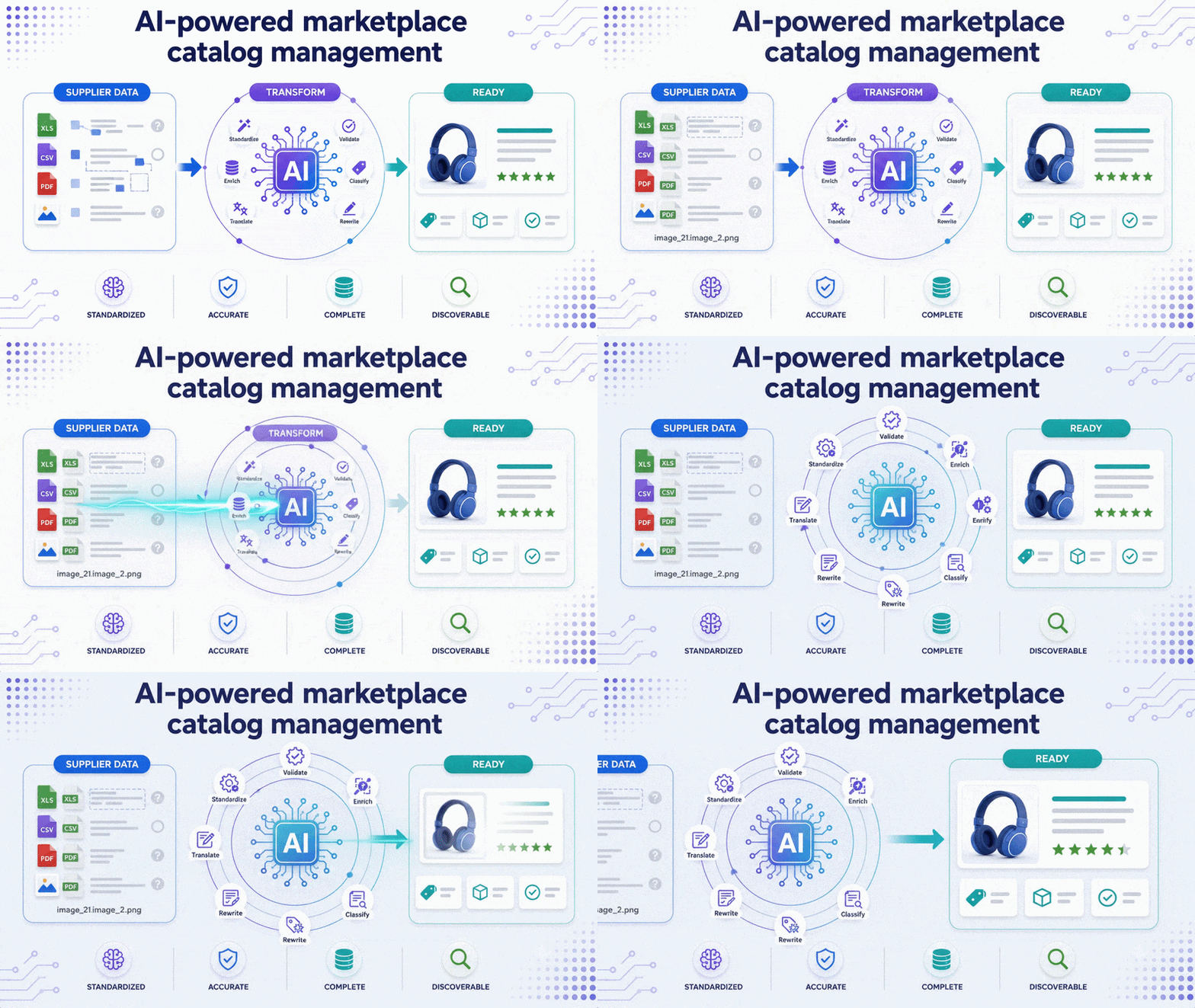
Seller onboarding can become a bottleneck when suppliers provide product information in different structures. Mirakl introduced Catalog Transformer in May 2024 to automate product data matching, correction, enrichment, rewriting and translation. Mirakl said it could reduce a process taking more than three months to a single day.
Catalog quality also matters as AI participates in product discovery. In April 2026, Mirakl reported more than 47 million product transformations with a 98% success rate. These are vendor-reported figures, so they should be read as Mirakl’s reported operating results rather than an independent benchmark. They illustrate why marketplace catalog management is becoming an ongoing capability.
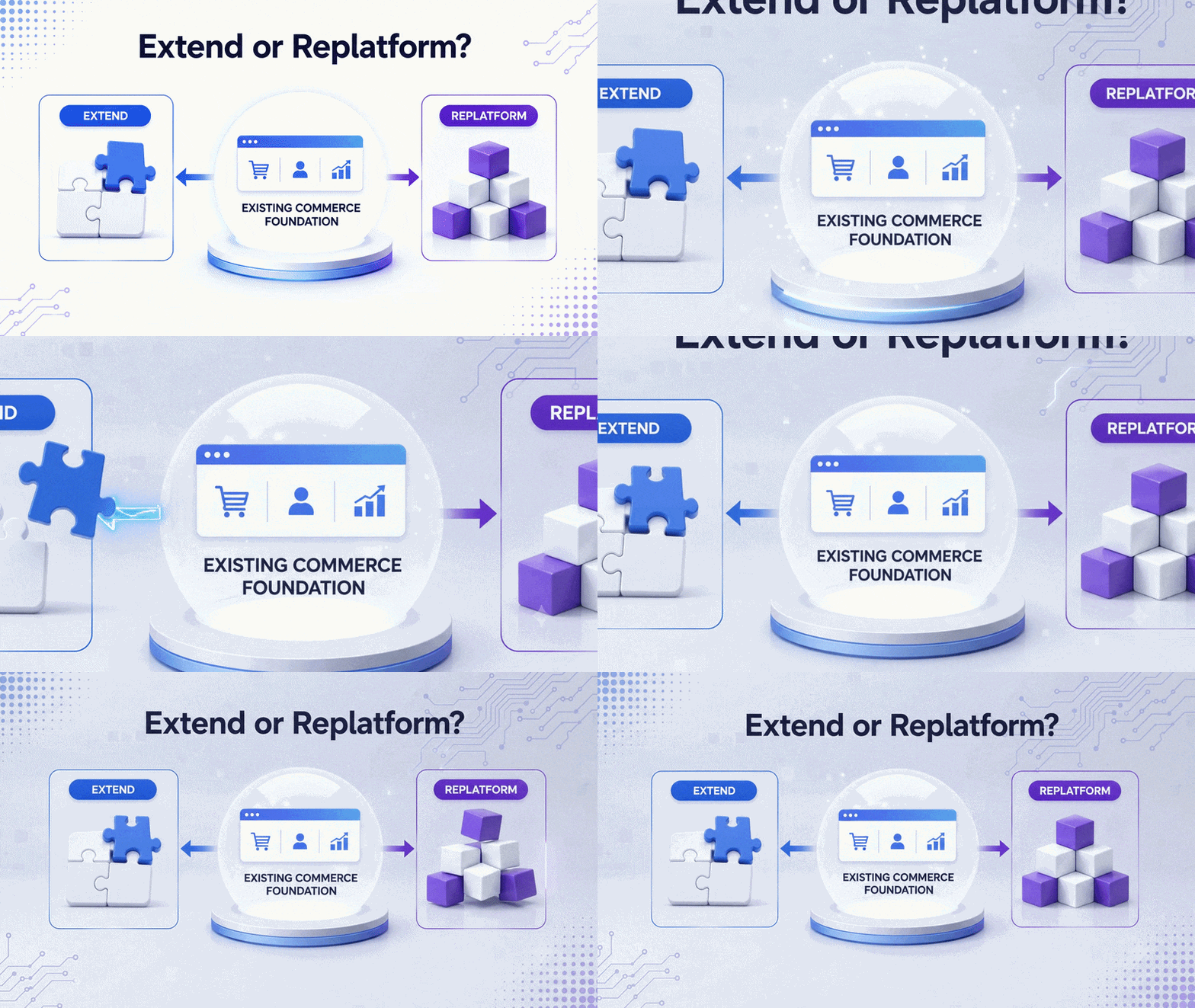
The Mirakl developer portal lists Adobe Commerce (Magento 2) as a supported operator connector, alongside Salesforce Commerce Cloud and Shopify Plus. Architecturally, this allows the commerce and marketplace platforms to remain distinct while exchanging the data required to operate the marketplace: products, offers, inventory, orders, and seller information.
What an extend-first model changes
Extending the commerce foundation means preserving systems that already perform well and adding marketplace-specific capabilities where they are needed. The storefront can continue to provide the customer experience, while the marketplace layer manages seller relationships and multi-seller operations.
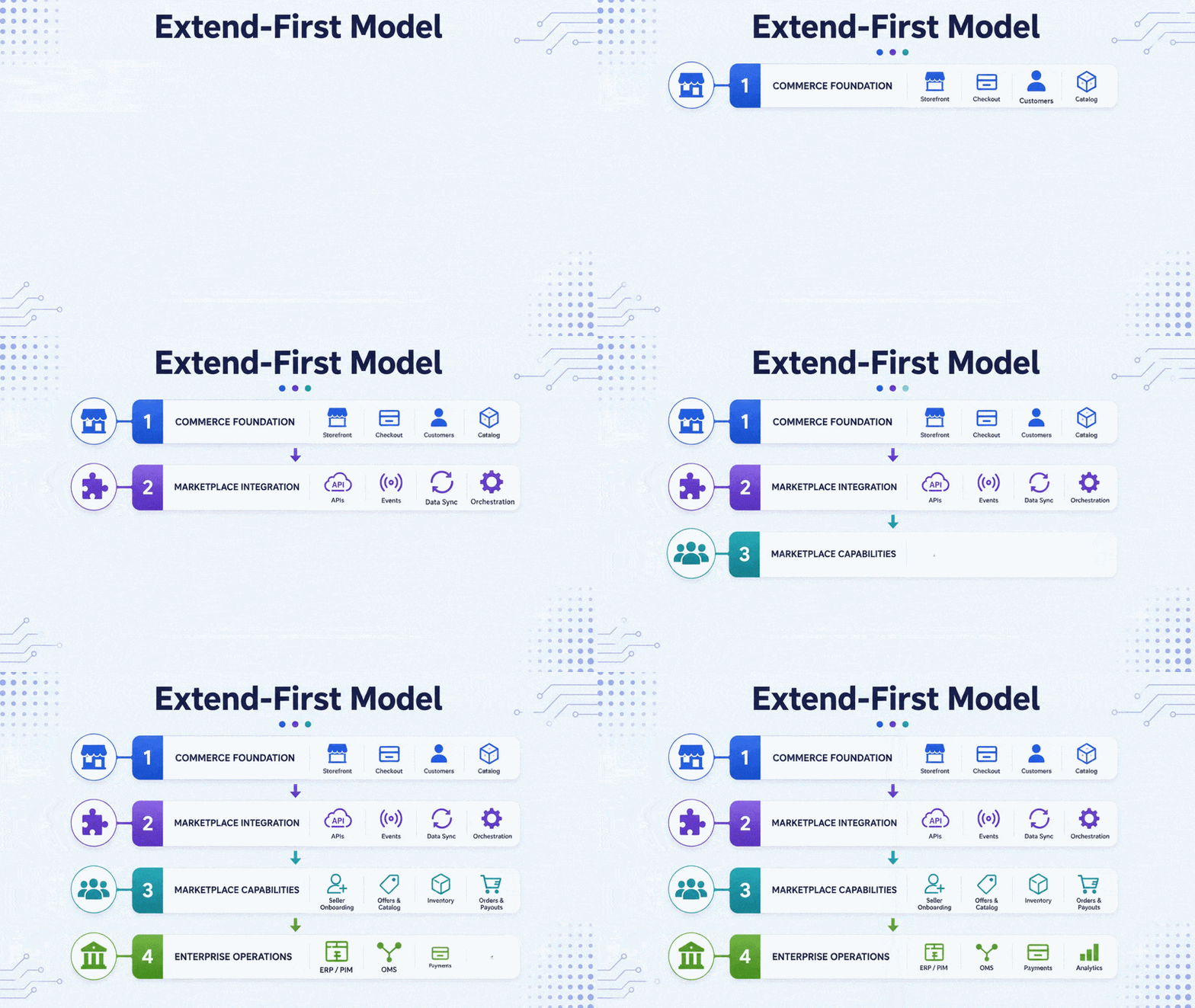
- Commerce foundation: customer identity, storefront, search, pricing, checkout and existing integrations.
- Marketplace layer: seller onboarding, offers, seller inventory, order workflows, commissions and seller operations.
- Integration layer: APIs, events and synchronization between products, offers, inventory, orders and enterprise systems.
- Financial layer: existing pay-in providers plus marketplace payout capability where required.
This separation can preserve existing customer-facing capabilities while adding the operating model required for multiple sellers. It also creates clearer ownership and a more focused change scope for marketplace growth.
How Mirakl supports marketplace expansion
Integrating Adobe Commerce with Mirakl
Mirakl’s connector manages the synchronization required for marketplace commerce. The developer portal identifies Adobe Commerce (Magento 2) as an operator connector. This marketplace integration keeps the platforms distinct while exchanging required data. For headless implementations, review the API and storefront layers so marketplace data is available where the customer experience needs it.
AI-powered marketplace catalog management
Seller onboarding can become a bottleneck when suppliers provide product information in different structures. Mirakl introduced Catalog Transformer in May 2024 to automate product data matching, correction, enrichment, rewriting and translation. Mirakl said it could reduce a process taking more than three months to a single day.
Catalog quality also matters as AI participates in product discovery. In April 2026, Mirakl reported more than 47 million product transformations with a 98% success rate. These are vendor-reported figures, so they should be read as Mirakl’s reported operating results rather than an independent benchmark. They illustrate why marketplace catalog management is becoming an ongoing capability.
Preparing your marketplace for agentic commerce and AI discovery
Adobe reported a 693.4% year-over-year increase in AI-source traffic to US retail sites during the 2025 holiday season. In February 2026, Adobe Commerce announced its commitment to support Universal Commerce Protocol and Agentic Commerce Protocol standards.
Mirakl launched Agentic Activation in April 2026 with Agentic Product Enrichment in open beta and Agentic Channels as live capabilities. Mirakl describes the goal as making product information easier for AI systems to understand and connecting merchants with AI shopping channels.
Agentic commerce also increases the importance of marketplace catalog management. Product attributes, availability, pricing context and category information need consistent structure for AI systems to interpret and retrieve them as product discovery expands across search engines and AI assistants.

Marketplace operations: Seller onboarding, payouts and trust & safety
A marketplace introduces financial, compliance and operational responsibilities that differ from first-party commerce. Seller onboarding, marketplace seller management, commissions, order routing, returns, disputes and payouts need defined ownership and reliable data flows.
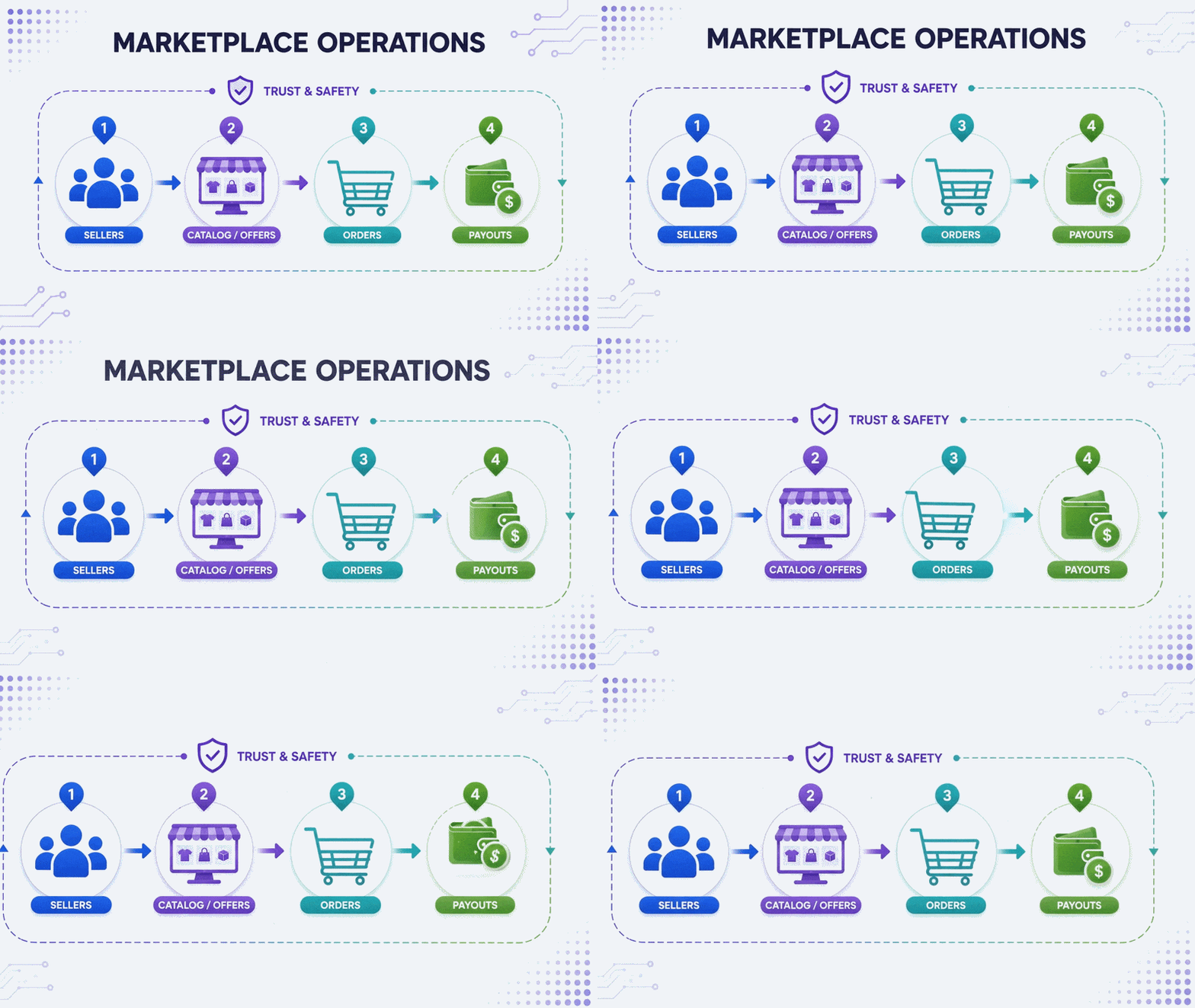
Mirakl Payout is designed for seller payout workflows while remaining compatible with existing pay-in provider relationships. The Mirakl Adobe Commerce connector does not provide the pay-in integration itself, so payment architecture needs separate design.
Mirakl announced its Trust & Safety capability in May 2026, with early access beginning that month and standalone availability starting in Q3 2026. It uses AI to identify potentially problematic products across text and images, while keeping human judgment in the review process.
Marketplace architecture: Key decisions to address before launch
Adding a marketplace layer changes where architecture work happens. Answer the key design questions before seller onboarding begins.
- Data ownership: define the source of truth for product attributes, offers, prices, inventory and seller information.
- Order orchestration: define how multi-seller orders move between the marketplace platform, commerce platform, OMS and fulfilment systems.
- Payment responsibility: separate customer pay-in processing from seller payout and reconciliation.
- Failure handling: design retries, queues, monitoring and reconciliation for asynchronous marketplace flows.
- Performance: load-test product discovery, cart, checkout and marketplace synchronization using expected seller and transaction volumes.
- Governance: define seller approval, catalog quality, compliance, dispute and return processes before launch.
Common marketplace architecture challenges and solutions
| Challenge | Business impact | Solution |
| Inconsistent supplier data across sellers | Catalog errors, incorrect product pages, customer complaints | Mirakl Catalog Transformer automates matching, correction, and enrichment |
| Payment complexity across multiple sellers | Reconciliation burden, delayed payouts, compliance risk | Separate pay-in from seller payout; use Mirakl Payout for disbursements |
| Order routing failures in multi-seller checkouts | Split orders arrive incomplete; customer experience breaks | Define order orchestration between Mirakl, Adobe Commerce, OMS, and fulfilment before launch |
| Seller onboarding delays blocking assortment growth | Marketplace growth stalls while sellers wait to go live | Automate approval workflows and catalog quality gates in Mirakl's operator tools |
| Product data not structured for AI discovery | Products excluded from agentic and generative search surfaces | Run Agentic Product Enrichment to meet attribute completeness requirements |
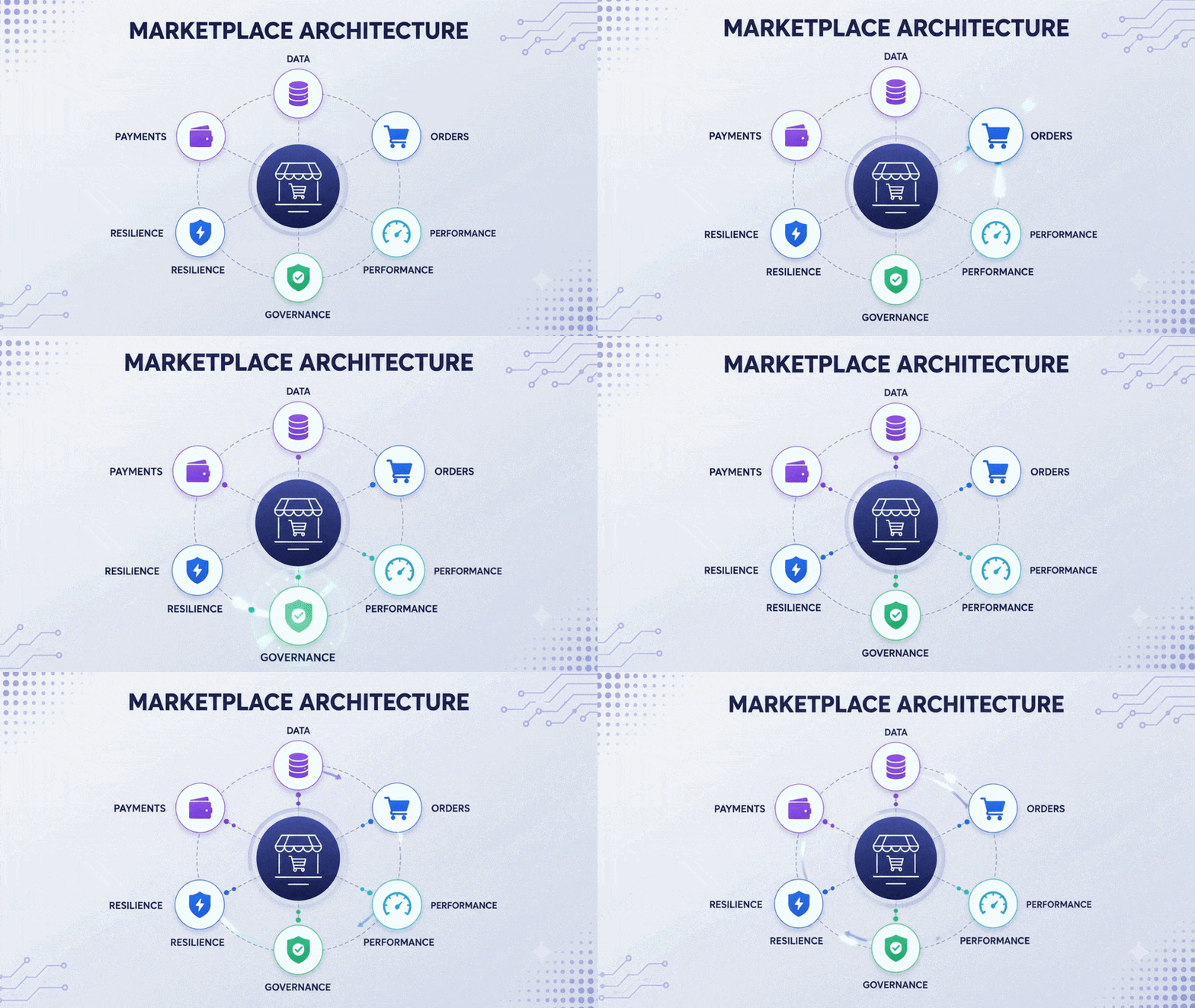
These responsibilities should be explicit so the customer experience remains unified and operational ownership stays clear.
How to choose the right marketplace architecture for your business
No universal threshold makes one architecture correct for every retailer. Start with business outcomes, then test the current platform against them.
| Evaluate | Consider extending when | Consider replatforming when |
| Business outcome | Marketplace is one part of the growth strategy. | Marketplace becomes the primary commerce model. |
| Functional fit | Required marketplace capabilities can be added through APIs and platform services. | Core requirements require extensive customisation across the commerce stack. |
| Time to market | Existing investments can support the required launch timeline. | A broader transformation is already justified by the business roadmap. |
| Performance | Load testing shows sufficient capacity for projected traffic and seller growth. | The current architecture cannot meet projected performance requirements. |
| Cost and risk | Extension provides a better total cost and disruption profile. | Ongoing customisation and operational complexity outweigh the value of preserving the current foundation. |
| Future direction | The existing foundation supports planned API, headless and AI initiatives. | The long-term strategy requires a fundamentally different commerce foundation. |
Implementing an enterprise marketplace strategy
A Mirakl implementation should begin with architecture and operating responsibilities. Confirm how the marketplace integration connects commerce, catalog, seller, order, payment and fulfilment processes, then validate the design against expected customer and seller journeys.
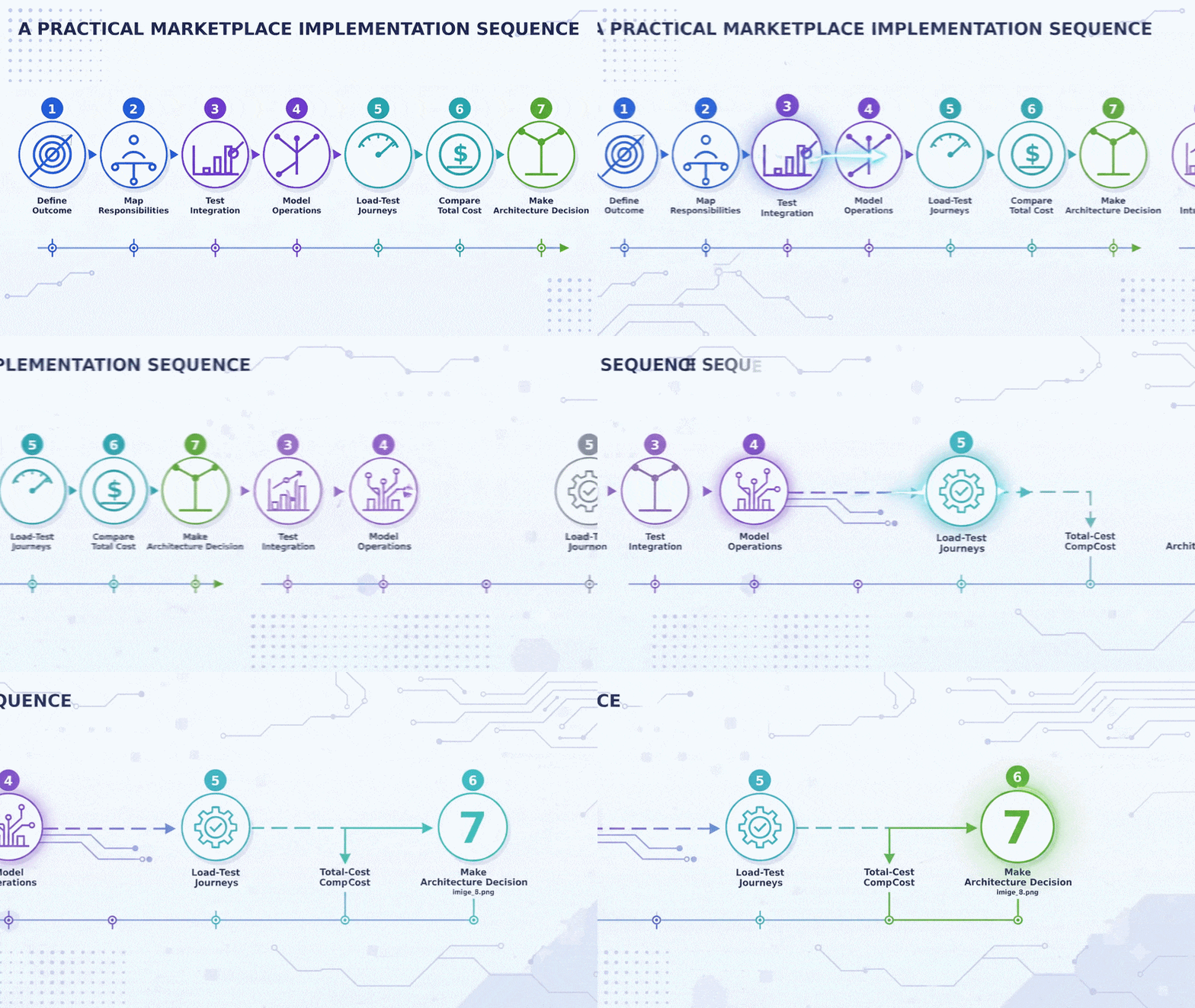
- Define the marketplace outcome. Establish target assortment, seller growth, GMV contribution, customer experience and timing.
- Map existing responsibilities. Identify which systems own catalog, pricing, inventory, customer, order, payment and fulfilment data.
- Test integration fit. Validate APIs, events, synchronization frequency, error handling and authentication before committing to implementation.
- Model the operating process. Document seller onboarding, catalog quality, order routing, commissions, payouts, returns and support.
- Load-test the critical journeys. Measure product discovery, cart, checkout and synchronization under projected marketplace conditions.
- Compare total cost. Include platform, integration, migration, testing, training, operations and maintenance.
- Make the architecture decision. Choose the smallest architectural change that can reliably deliver the required business outcome.
For the implementation partner, the focus should remain on architecture, integration, implementation and roadmap decisions that fit the enterprise’s existing commerce landscape.
Start your enterprise marketplace strategy with Ranosys and Mirakl
Ranosys implements enterprise marketplace solutions on Adobe Commerce using the Mirakl marketplace platform. As an Adobe Solution Partner, Ranosys brings commerce architecture depth and marketplace operations knowledge to move an enterprise from architecture decision to live marketplace.
What Ranosys delivers for marketplace projects:
- Architecture assessment: evaluate the Adobe Commerce environment against marketplace requirements before committing to an approach
- Mirakl integration: connector implementation, API configuration, and synchronisation design across products, offers, inventory, and orders
- Payment architecture: separate design for pay-in and seller payout using Mirakl Payout
- Seller onboarding design: catalog quality gates, data governance, and automated approval workflows
- Catalog and AI readiness: attribute completeness audits and Agentic Product Enrichment preparation
- Load testing: marketplace-specific performance validation at projected cart, checkout, and synchronisation volume
- Post-launch managed services: synchronisation monitoring, error resolution, and marketplace operations support
- Roadmap advisory: phased expansion planning as seller count and GMV grow
Building an enterprise marketplace strategy with Mirakl
An ecommerce marketplace strategy does not automatically require replacing an existing commerce foundation. For enterprises with a capable platform, an extend-first architecture can preserve the customer experience while adding seller, offer, catalog, order and marketplace capabilities.
Mirakl provides one example through commerce connectors, catalog automation, agentic commerce capabilities, payout services and marketplace operations. The right choice depends on functional fit, performance, cost, time to market, existing investment and long-term direction.
Evaluate your current commerce foundation before choosing the architecture for marketplace growth.

Ankit Jasani
Senior System Analyst
Ankit Jasani is a Senior System Analyst at Ranosys with 10+ years of experience in Adobe Experience Cloud, including Adobe Commerce (Magento), enterprise eCommerce development, and digital experience solutions. An Adobe Commerce Champion 2025–26 and 11x Adobe Certified Developer, he specializes in scalable commerce solutions, PWA Studio implementations, and enterprise system integrations. His expertise spans headless commerce, digital transformation, and emerging Adobe ecosystem technologies, including AEP, RT-CDP, and API Mesh. Connect with him on LinkedIn.


